Moralizing rationality... is associated with more sharing of hostile and false political headlines

In our recent paper published in Political Communication (with Michael Bang Petersen), we show that moralizing rationality — claiming to view basing one’s beliefs on the evidence and logic as a moral virtue — is associated with more sharing of hostile and false news targeting one’s political rivals on social media.
📄 Open access: “Moralization of Rationality Can Stimulate Sharing of Hostile and False News on Social Media, but Intellectual Humility Inhibits it” https://doi.org/10.1080/10584609.2024.2363542
The rationalist intuition is widespread, from Socrates to Sam Harris and Pinker: if people valued logic and evidence more, if they could moralize this intellectual goal more, they’d share less conspiracy theories, fall for fake news less, and interact in less hostile ways in political discussions. Our data suggest a more nuanced story.
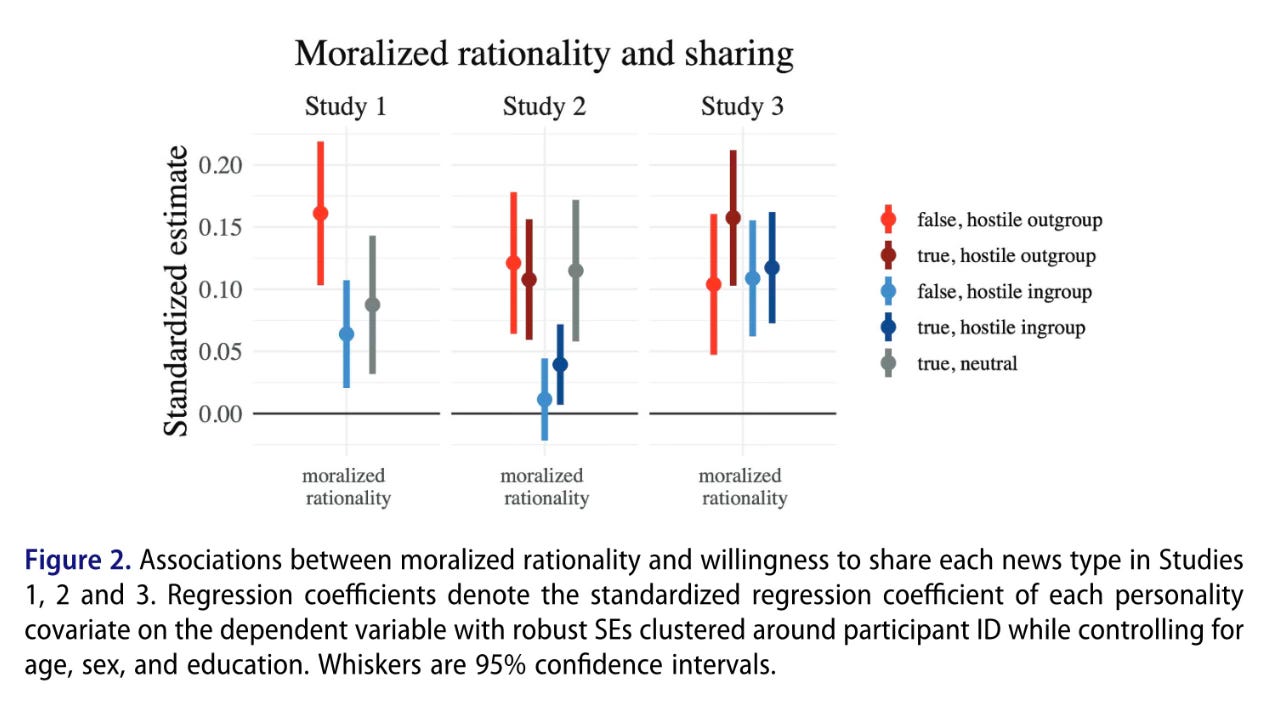
Across three large U.S. studies (N = 4,800, two preregistered, including a nationally representative YouGov sample), we find that people who strongly moralize rationality are more likely to share hostile news targeting the political outgroup — including ones that make fabricated claims (Fig 2). Why? Because we show through some simple modeling that moralizing rationality often goes hand in hand with status-seeking motivations: moral grandstanding disguised as a commitment to “the facts.” People who have high status motives, who like to vocally express themselves on politics, will tend to gravitate towards the conviction they are speaking in the name of rationality and virtue. Like a sort of sincere, post hoc rationalization to facilitate persuasiveness.
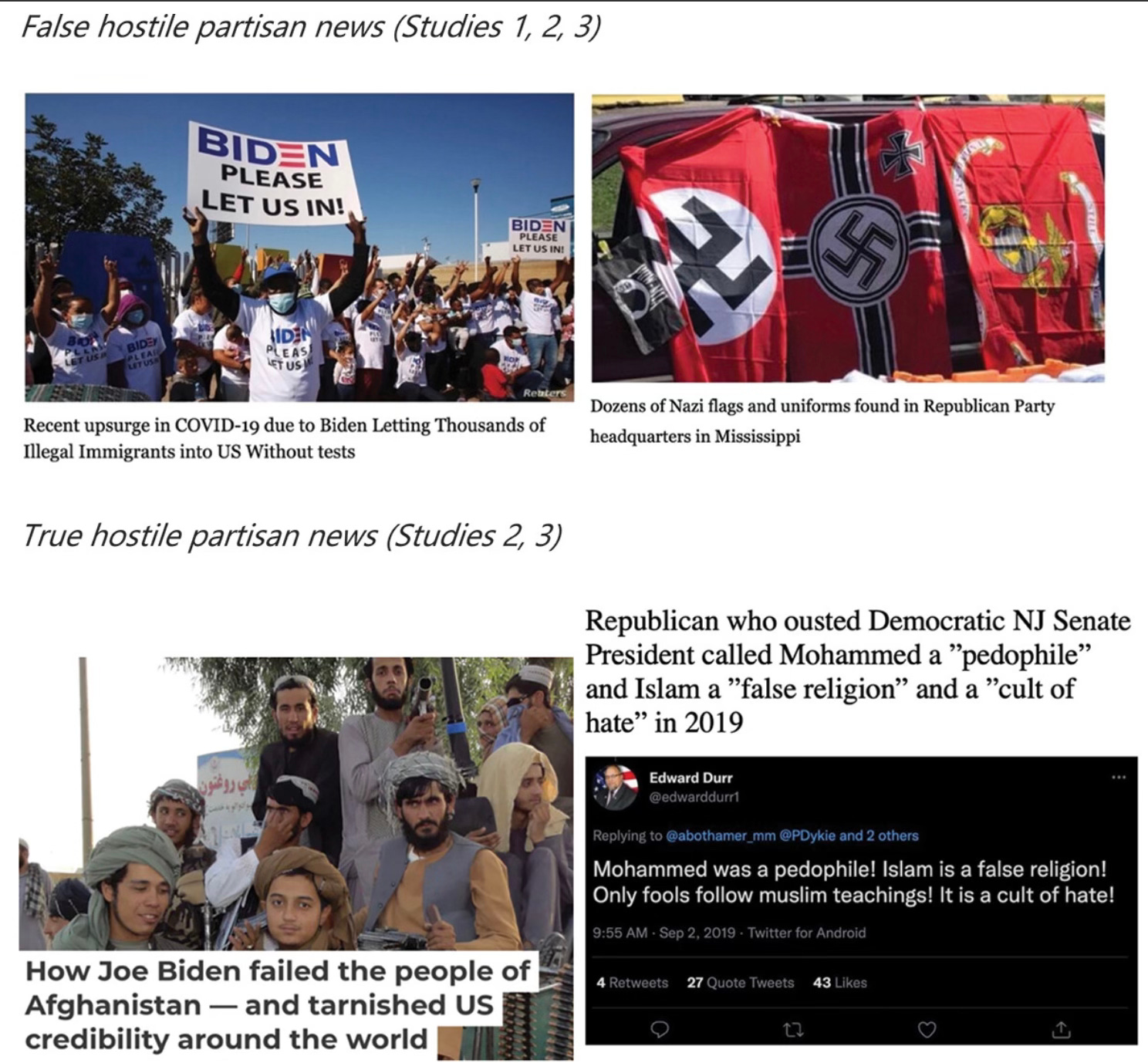
Here are some headlines we used:
Claiming to be the rational one in the room, it turns out, can be less about pursuing truth and more about asserting dominance. Of course, it doesn’t mean every instance of moralizing rationality is in fact underpinned by status motives (I hope it’s less the case among scientists…), but it can.
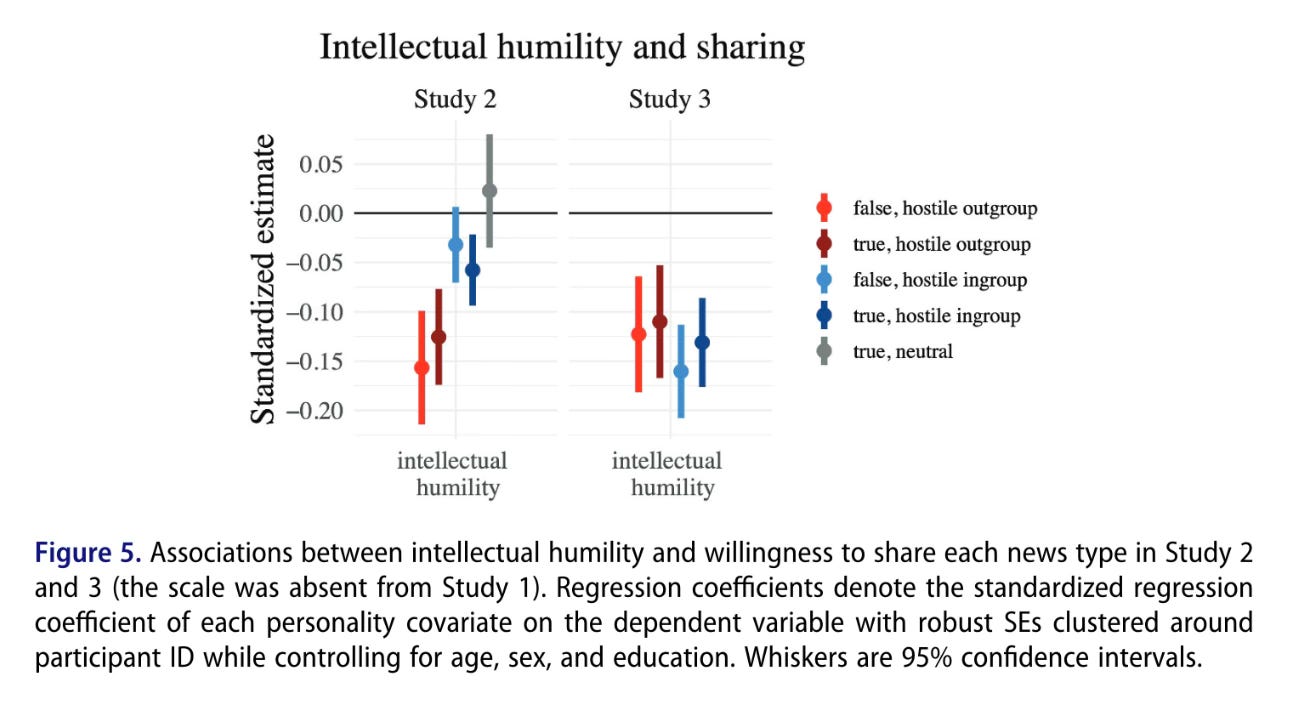
But the paper isn’t just about the bad news. We also identify a robust protective factor: intellectual humility — the awareness that your intuitions are fallible, and that trusting others’ perspectives is often wise. People high in intellectual humility were consistently less likely to share hostile and false news targeting the political outgroup, and also less likely to believe in them (Fig 5).
The takeaway: genuine rationality isn’t reached just by loudly claiming to moralize logic and the facts. It requires mastering principles of rigorous reasoning (e.g., statistics, knowing one’s cognitive biases) and sometimes restraining the ego, trusting your hunches less, and trusting others more.
Check out the paper in 📄 Open access: “Moralization of Rationality Can Stimulate Sharing of Hostile and False News on Social Media, but Intellectual Humility Inhibits it” https://doi.org/10.1080/10584609.2024.2363542
I think the important distinction here seems to be between moralizing rationality as a way of signaling status and authority, and a true moral commitment to rationality as a principle. If a person is not even trying to base their beliefs on evidence, however imperfectly, then they are by default subject to all manner of tribal beliefs.